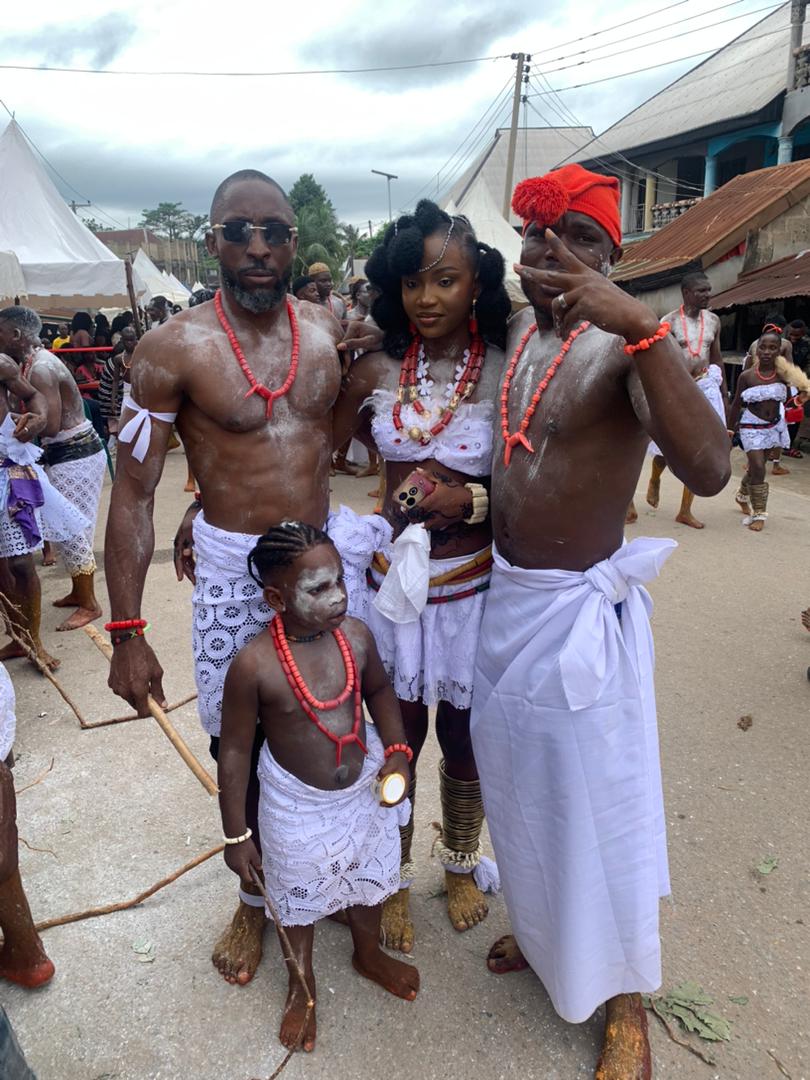
Among the people of Umor (Ugep), the giving of a name to a child has traditionally been more than simply choosing what the child will be called. It is a cultural act that connects the child to family, community, history and identity.
The traditional naming ceremony is known as ae'kpe.
Ae'kpe is the occasion through which a child is formally introduced and given a name within the family and, traditionally, among the wider community. It is a moment of celebration, but it is also a moment of identity and responsibility.
A name is expected to mean something.
It may preserve a memory. It may describe an event or circumstance. It may express the feelings of the family at the time of the child's birth. It may honour someone who came before the child. It may be connected to a particular person, place, object, belief or experience. In some circumstances, a name may even be connected to the belief that a deceased loved one or ancestor has returned through the birth of the child.
This is one of the reasons naming has always been an important part of Umor culture.
More Than Giving a Name
Ae'kpe was traditionally not simply a ceremony where a name was announced and everyone went home.
The person chosen to name a child could be someone who occupied an important place in the life of the family. It could be a respected elder, family member, mentor, godfather, godmother or another person whom the parents and family trusted.
The honour of naming a child could therefore come with a relationship and responsibility.
Traditionally, the person who gave the child a name was expected to take an interest in the child's life as he or she grew. The relationship could extend beyond the day of ae'kpe into the child's upbringing and adulthood.
This made naming a communal responsibility.
A child was not regarded as belonging only to the parents. The wider family and community also had a role to play in helping the child grow into a responsible member of society.
The Celebration
Like many important occasions in Umor, ae'kpe was also an occasion for celebration.
The naming of a child could bring family members, friends, relatives and members of the community together. Food and drinks were provided, and the occasion gave people an opportunity to celebrate the arrival of a new member of the family.
The celebration was therefore not separate from the cultural meaning of the ceremony. It was part of how the community welcomed the child.
The gathering also provided an opportunity for people to witness the name that had been given to the child and to recognise the relationship between the child, the family and the person who had given the name.
How Names Were Chosen
Traditional names in Umor did not all come from one source.
Some names were connected to circumstances surrounding a child's birth. Others could be influenced by an event that occurred around the time of the birth or by something significant that had happened to the family.
Names could also be connected to people.
A child could be named after a respected or beloved person. In some families, names were used to preserve the memory of relatives who had passed away. There were also circumstances in which a child could be given the name of someone believed to have returned through reincarnation.
Other names could be connected to figures, trees, places, experiences or beliefs.
This explains why traditional Umor names are so important to the study of our history. Behind a name can be a story that tells us something about the people who lived before us.
The Person Who Gives the Name
One important aspect of traditional naming is the person who gives the child the name.
In today's society, it is common for parents to decide almost entirely what their children will be called. But traditionally, the naming of a child could involve people outside the immediate parents.
A respected person could be invited or chosen to name the child. This person could be a mentor, godfather, godmother, elder, relative or another person considered important to the family.
The person was not simply being given an opportunity to choose a name.
The honour could establish a relationship.
That relationship could mean being present in the child's life, offering guidance, providing support and helping the child as he or she grew. In this sense, ae'kpe could create a bond that lasted long after the ceremony itself.
Ae'kpe and Community
One of the things that makes traditional naming important is the communal nature of it.
The birth of a child was not viewed as an isolated family event. It was something the community could celebrate because another person had been added to the community.
Through ae'kpe, the child was introduced not only to the immediate family but also to the wider social world into which he or she had been born.
The ceremony therefore carried both personal and communal significance.
The child received a name, but the community also gained a new member.
How Naming Has Changed
Like many aspects of culture, the practice of naming in Umor has changed over time.
Modern families now have greater freedom in choosing names for their children. Parents often choose names based on meanings they want their children to carry, personal experiences, religious beliefs, aspirations, emotions or circumstances surrounding the child's birth.
This has contributed to the emergence of many modern Lokaa names.
Some contemporary names are complete expressions or statements. They can communicate gratitude, joy, hope, love, peace, victory, faith, thanksgiving and other emotions or beliefs.
This is different in some ways from many of the older names whose meanings and origins are not always immediately known today.
But both forms are part of the history of naming in Umor.
The older names tell us about an earlier period, while the newer names tell us about the experiences and beliefs of the generations creating them.
Preserving Ae'kpe
Today, many traditional practices are gradually becoming less common.
As older generations pass on and lifestyles change, some of the knowledge surrounding traditional ceremonies can disappear if it is not documented.
This is why ae'kpe deserves to be recorded.
We should not only remember that our people had a traditional naming ceremony. We should also preserve the knowledge surrounding it — the words used, the people involved, the practices followed, the songs, the foods, the celebrations, the responsibilities attached to naming and the stories told by those who experienced it.
Some of this knowledge still exists within our families and among our elders.
Our responsibility is to find it, document it, verify it and preserve it.
An Ongoing Record
The information presented here is part of Discover Ugep's ongoing effort to document the culture and history of Umor.
We recognise that no single article can capture everything about ae'kpe. There are details that may differ from one family, generation or community setting to another, and there are aspects that can only be properly understood by speaking with people who have lived through the tradition.
For this reason, we will continue to speak with our elders, cultural custodians, families and other people with knowledge of traditional Umor practices.
As we learn more, this article will be expanded and updated.
Our goal is not to create a version of our culture from assumptions or incomplete information. Our goal is to preserve what our people know, while carefully documenting the stories and practices that have been passed down from one generation to another.
Ae'kpe is therefore more than an old ceremony.
It is part of how Umor welcomed a child, gave that child an identity, connected the child to family and community, and began a relationship that could continue throughout the child's life.
And as we preserve our names, we are also preserving the stories behind them.
This is our heritage. This is our story.