A symbol of warriorhood, fertility, protection and ancestral memory
Location: Ikpakapit Ward, Ugep, Yakurr LGA, Cross River State
Category: Cultural Heritage | Traditional Beliefs | Sculpture | Oral History
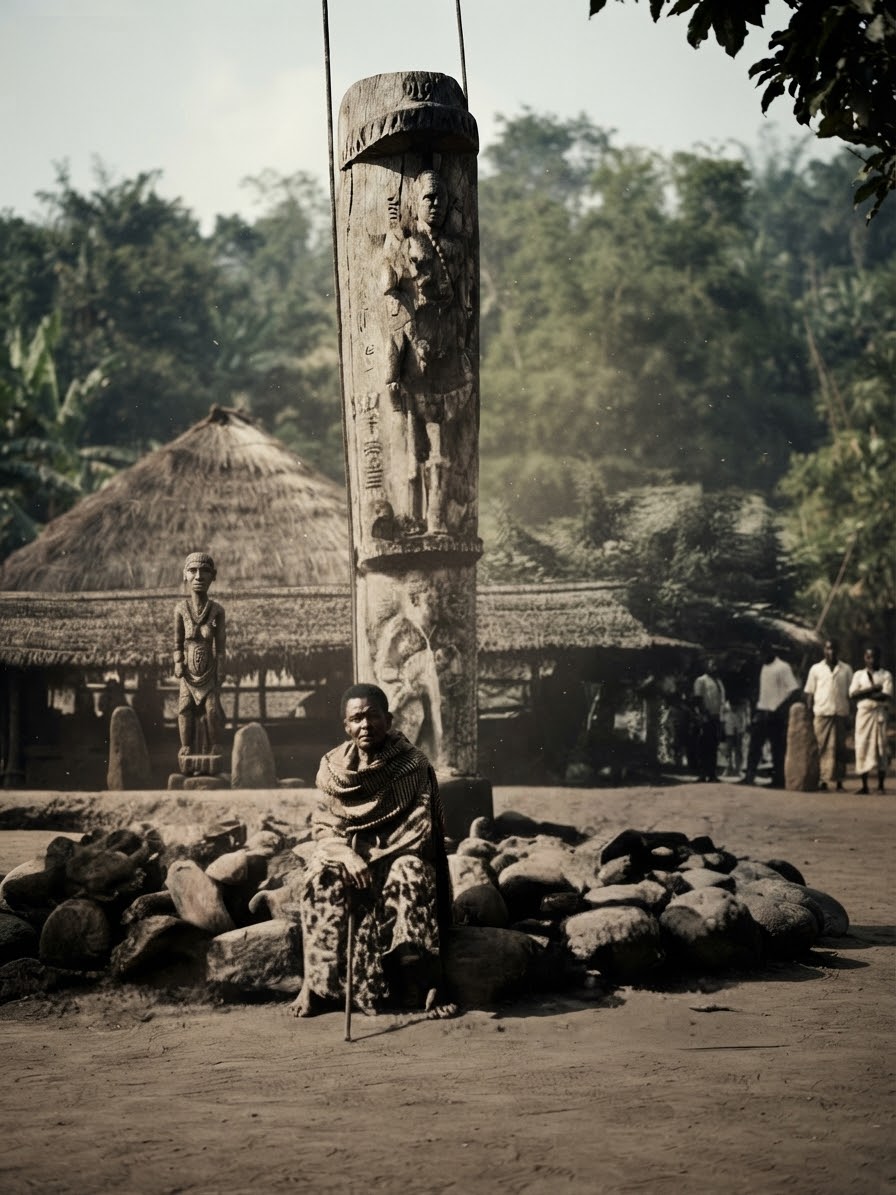
Beside the Ikpakapit Town Hall in Ugep stands a cultural monument that carries memories of an older Ugep — Oba-Agbor, traditionally regarded as the war and fertility statue of the Ikpakapit people.
Its exact date of origin remains unknown. There is currently no confirmed historical record establishing when the statue was created or placed at its present location. However, according to oral accounts from living elders, Oba-Agbor has stood there for as long as they can remember.
For Discover Ugep, this oral memory is itself an important part of the historical record.
The Warrior and the Mother
Oba-Agbor presents a striking representation.
At the top is the figure of an Umor warrior, standing erect with a dane gun held upright by his side. Beneath him is a woman carrying a young child.
The two figures bring together two powerful dimensions of traditional life: war and fertility.
The warrior represents strength, courage, protection and the responsibility to defend the community. The woman and child represent motherhood, fertility, continuity and the preservation of life.
In this sense, Oba-Agbor can be understood as a representation of two things essential to the survival of the community: the strength to protect it and the ability to sustain its people.
The Ako-Ta — The War Stones
Surrounding or situated alongside Oba-Agbor are solid stones traditionally known among the Umor people as Ako-Ta, meaning “war stone.”
Oral accounts provide a deeper explanation for this name.
According to elders, in the olden days, whenever Ugep was preparing for war, warriors from Ikpakapit would gather around Oba-Agbor and the Ako-Ta before departing for battle.
The area served as a place where the warriors would prepare and fortify themselves for war. They were said to remain there throughout the period of the conflict, leaving only after the war had ended.
It was therefore not simply a place where warriors passed through before battle. According to the oral tradition, it was a warrior gathering ground — a place of preparation, solidarity and spiritual fortification.
This tradition offers an explanation for the name Ako-Ta: the stones became associated with the warriors and the period of preparation and waiting that surrounded warfare.
The Right to Touch Oba-Agbor
The Ako-Ta also carried a strong association with warrior identity.
According to local oral tradition, only a true Umor warrior could step upon the Ako-Ta and touch Oba-Agbor.
This suggests that access to the monument was historically connected to status, identity and one's recognised position as a warrior.
The belief surrounding the stones therefore goes beyond their physical presence. They formed part of a cultural system in which courage, warriorhood and communal responsibility were recognised and respected.
A Place of Preparation Before War
The tradition surrounding Oba-Agbor gives the monument an important place in the history of warfare among the people of Ikpakapit.
Before warriors went to war, they gathered together.
They prepared together.
They remained together.
And, according to the elders, they stayed within the space of Oba-Agbor and the Ako-Ta until the conflict was over.
This paints a picture of warfare that was not simply about individuals going into battle. It was a collective responsibility involving preparation, unity, courage and the defence of the wider community.
A Monument to an Older World
Today, someone passing beside the Ikpakapit Town Hall may see only an old statue and a collection of stones.
But Oba-Agbor represents far more.
It is a surviving physical expression of an older worldview in which warfare, protection, fertility, family and the survival of the community were deeply interconnected.
The warrior stands ready to defend.
The mother carries the future.
And beneath them, the Ako-Ta preserve the memory of the warriors who once gathered there before going to war.
Preserving the Memory
The exact age and origin of Oba-Agbor remain subjects for further research. More oral interviews with elders, traditional custodians and members of the Ikpakapit community may help establish its history and provide greater insight into the practices and beliefs associated with the monument.
For now, its story remains largely preserved through oral tradition and the physical presence of the monument itself.
That makes documentation especially important.
As Ugep continues to modernise, places such as Oba-Agbor remind us that history does not exist only in written documents. It also lives in the memories of elders, in sacred spaces, in objects, in stones and in the stories passed from one generation to another.
Oba-Agbor stands as a reminder of an era when the defence and continuation of the community were inseparable — when warriors gathered around the Ako-Ta, prepared themselves for battle and stood together until the war was over.
Discover Ugep is committed to documenting, preserving and sharing these stories, so that the cultural memory of Ugep is not lost with the passing of generations.
This account is based primarily on oral traditions and accounts shared by living elders. The exact date of origin, original custodianship and historical development of Oba-Agbor remain subjects for further research and documentation.