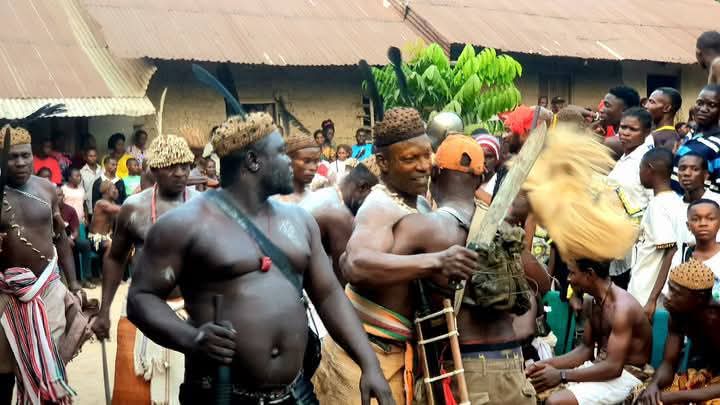
TRADITIONAL BELIEFS
People: Ugep (Umor) and the Yakurr
Region: Cross River State, Nigeria
Subject: Traditional Religion, Spirituality, Customary Practices, and Social Values
Author: Knight Alex Ofem
1. Introduction
Traditional beliefs comprise the religious convictions, customs, values, and practices transmitted from one generation to another within a community. They provide frameworks through which communities understand life, death, ancestry, spirituality, morality, health, justice, and the relationship between human beings and the natural and spiritual worlds.
Among the Yakurr people, including the people of Ugep (Umor), traditional beliefs historically formed an important part of social and cultural life before the widespread adoption of Christianity and other religious traditions.
Although the influence of Christianity and modern institutions has transformed many aspects of traditional life, elements of indigenous beliefs and practices continue to exist within the cultural memory and social life of the community.
2. Belief in Life After Death
A significant element of traditional Yakurr spirituality is the belief in life after death.
According to traditional belief, death does not necessarily mark the complete end of existence. Rather, departed members of the community are believed to continue their existence in a spiritual realm and to maintain a relationship, in some form, with the living.
Ancestors are traditionally regarded as having an important place within this spiritual worldview. They may be understood as capable of influencing the wellbeing of their descendants, including through protection, blessings, prosperity, or, in some traditional interpretations, misfortune when customary obligations are neglected.
These beliefs form part of the traditional understanding of the continuing relationship between the living, the dead, and future generations.
3. Libation and Ancestral Relationship
The practice of libation occupies an important place in traditional spiritual expression.
Within the traditional understanding of the Ugep people, libation is not simply viewed as the worship of deceased persons. It may instead be understood as a symbolic invitation through which ancestors are acknowledged and invited to share spiritually in food, drink, ceremonies, or other communal occasions.
The practice expresses respect for ancestors and reinforces the perceived relationship between the living and the departed. It is traditionally associated with requests for peace, protection, prosperity, guidance, and communal wellbeing.
4. Belief in Reincarnation
Reincarnation is another concept found within the traditional spiritual worldview of the Yakurr people.
The belief holds, in traditional understanding, that aspects of a deceased person's existence may return to the world of the living through subsequent births. Practices and traditions such as Keyeli have been associated with this broader understanding of reincarnation and ancestral continuity.
Such beliefs form part of the community's traditional interpretation of the relationship between generations and the continuity of human existence.
5. Traditional Medicine and Healing Practices
Traditional medicine has historically occupied an important position in Yakurr society.
Traditional healers have provided forms of healthcare based on indigenous knowledge of medicinal plants, healing practices, spiritual beliefs, and other customary methods. Even with the development of hospitals, modern medicine, public health programmes, and other contemporary healthcare services, some members of the community continue to consult traditional healers.
The coexistence of traditional and modern approaches to healthcare reflects the continuing influence of indigenous knowledge within contemporary Yakurr society.
6. Protective Charms and Traditional Spiritual Practices
Traditional beliefs concerning spiritual protection have also formed part of Yakurr cultural practice.
Some members of the community have traditionally used charms and other protective objects based on the belief that they provide spiritual protection against perceived dangers, including malevolent forces, poisoning, accidents, or threats during periods of conflict.
These practices are best understood within the cultural and spiritual context in which they developed and do not constitute scientifically established methods of protection.
7. Traditional Approaches to Dispute Resolution
Traditional Yakurr society also developed customary approaches to the settlement of disputes.
These systems may be understood within the broader framework of Alternative Dispute Resolution (ADR), in which disputes are addressed through dialogue, mediation, customary authority, reconciliation, and community participation rather than relying exclusively on formal judicial institutions.
Traditional dispute-resolution processes are valued within the community for their emphasis on fairness, participation, reconciliation, restoration of relationships, and preservation of communal harmony.
8. Ete-Ete Akpanawan and the Tradition of Judicial Integrity
An oral account concerning Ete-Ete Akpanawan of Mpanigha in Bikobiko Ward is traditionally remembered as an example of integrity and impartiality in customary leadership.
According to the account, Ete-Ete Akpanawan was one of the senior and respected chiefs of his community. Two of his paternal brothers were reportedly involved in a dispute concerning the demarcation of land boundaries.
Before the matter was decided, one of the disputants is said to have attempted to influence the outcome by presenting Ete-Ete Akpanawan with six pence, which was considered a significant sum of money at the time.
Rather than accepting the money privately, the chief reportedly brought the matter before the gathering and publicly disclosed the circumstances under which the money had been offered. The traditional judgment was subsequently delivered in favour of the party who had not attempted to influence the proceedings through a gift.
The story has continued to be remembered within oral tradition as an illustration of integrity, impartiality, accountability, and respect for justice in traditional leadership.
Because the account is preserved through oral tradition, it represents a cultural memory of customary justice and should be considered alongside other oral histories and documentary sources when reconstructing the history of traditional judicial practices in Yakurr.
9. Contemporary Relevance
Traditional beliefs remain an important component of Yakurr cultural heritage, although their expression has changed over time as a result of Christianity, formal education, modern healthcare, urbanization, and other social transformations.
Some traditional practices have declined, while others have been adapted, retained, or incorporated into contemporary cultural life.
The documentation of these beliefs is therefore important not only for understanding the religious history of Ugep and the wider Yakurr people but also for preserving knowledge concerning their traditional concepts of ancestry, spirituality, healing, morality, justice, community, and social responsibility.