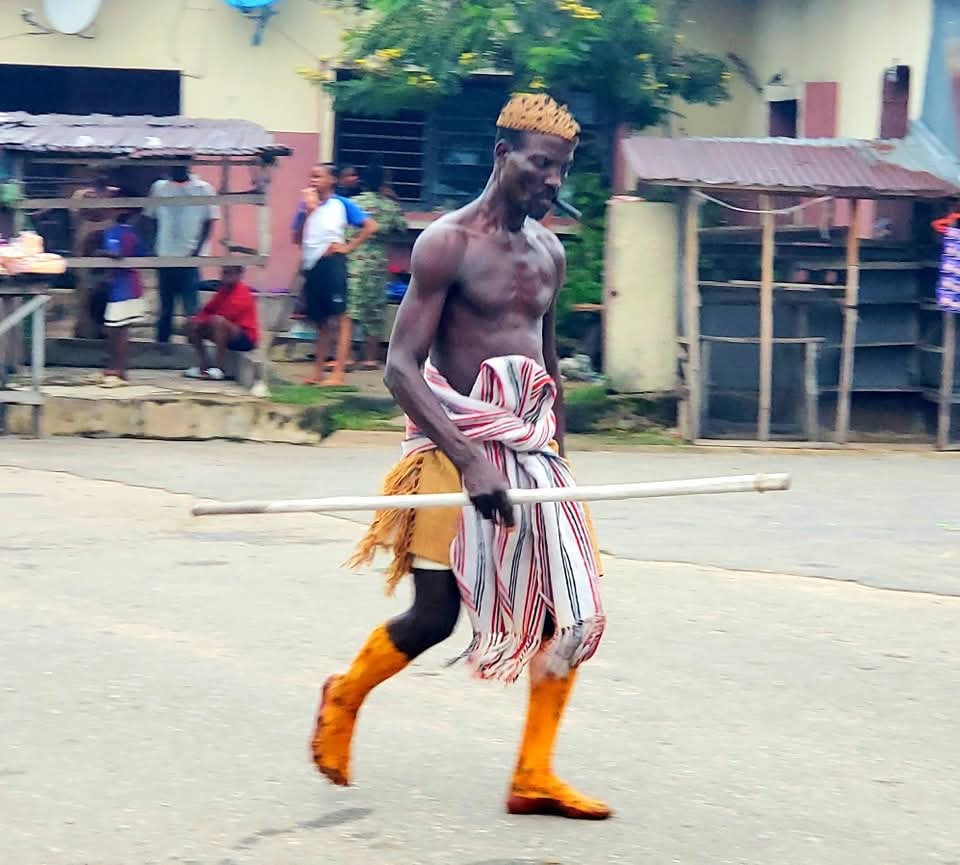
People: Yakurr
Region: Cross River State, Nigeria
Subject: Migration, Oral Tradition, Settlement, and Historical Interpretation
Source Tradition: Yakurr Oral History
Author: Knight Alex Ofem
1. Introduction
Migration has played an important role in the formation and settlement of many communities throughout history. People have moved from one region to another for a variety of reasons, including the search for fertile land, access to resources, economic opportunities, security, and improved living conditions. Migration has also occurred as a result of warfare, conflict, environmental pressures, and other social circumstances.
The migration history of the Yakurr people is preserved primarily through oral traditions, genealogies, place names, cultural practices, and accounts passed from one generation to another. These traditions describe a series of movements from an ancestral homeland toward the territory occupied by the Yakurr people today.
2. Ancestral Homeland
According to Yakurr oral tradition, the ancestors of the Yakurr migrated from an ancestral homeland associated with the Oban mountain range, near the present-day Nigeria–Cameroon border.
The migration tradition also associates the ancestral movements with other groups, including the Okuni, Ojor, Nsofang, Okoroba, and Abiyang.
The precise historical chronology of these migrations remains a subject of oral history and scholarly interpretation. The traditions nevertheless constitute an important part of Yakurr historical consciousness and provide explanations for the relationships among the various communities of the region.
3. The Yakurr–Akpa Conflict Tradition
One of the most widely circulated accounts concerning the migration of the Yakurr relates to a conflict involving the Yakurr and the Akpa.
According to this oral tradition, the two groups had an agreement concerning the burial of persons who died under unusual or unnatural circumstances. The tradition states that the agreement was violated following the death of an Akpa person, when the body was allegedly treated in a manner contrary to the established burial arrangement.
The account further states that a woman known as Mma discovered what had occurred. According to the tradition, Mma had lost her only daughter and secretly followed the Yakurr to a forest burial site. Upon witnessing the incident, she returned and reported it to the Akpa king.
The report is said to have contributed to growing hostility between the two groups and eventually to armed confrontation.
4. Alternative Oral Account
Another version of the migration tradition attributes the conflict to the alleged exhumation of Akpa corpses by the Yakurr and the use of human remains in the preparation of traditional war charms.
According to this account, such practices were believed to provide spiritual protection or strength during warfare. The story is preserved as one of the traditional explanations for the hostility that developed between the Yakurr and Akpa and the subsequent movement of the Yakurr people from their earlier settlements.
These accounts should be understood within the context of Yakurr oral tradition. They represent inherited explanations of historical events and should not automatically be treated as independently verified historical facts.
5. Division of the Yakurr Migration
Yakurr oral tradition describes the migration as involving several groups that eventually established different communities in the region.
One major group is traditionally associated with the ancestors of Ugep, Ekori, and Mkpani. According to the tradition, this group followed a separate route while attempting to escape the Akpa offensive.
During the journey, the group reportedly stopped near the area of present-day Idomi when a woman went into labour. The group remained temporarily to care for her. According to the tradition, the family associated with this event subsequently became connected with the origins of the present-day Idomi community.
6. Ekpa Ntikpon and Lebokom
The migration continued until the group reached Ekpa Ntikpon, where oral tradition places a major confrontation with the Akpa.
Following the confrontation, the migrants are said to have settled temporarily at Lebokom, in the Ijiman area of present-day Ugep.
Subsequent movements eventually resulted in the establishment and development of different Yakurr communities.
The traditional migration route associated with these movements is known as Elomiti.
7. Migration and the Establishment of Nko
A second migration group is traditionally described as having travelled in a north-western direction after separating from groups associated with the Okuni and Ikom migrations.
According to the tradition, this group settled temporarily at Iko before continuing through areas associated with Adum territory. Their subsequent movement eventually led to the establishment of the present-day Nko community.
8. Migration and the Establishment of Ekori
A third group is traditionally said to have travelled through Ikot Ana and established a settlement known as Ikot Okpora Ekoripana.
According to the migration tradition, the group subsequently moved to the territory where the present-day community of Ekori was established.
These traditions provide a cultural explanation for the historical relationships and shared ancestry remembered among several Yakurr communities.
9. Scholarly Interpretations of Yakurr Migration
Yakurr migration traditions have also attracted the attention of scholars who have studied the history, anthropology, and settlement patterns of the Upper Cross River region.
In Who Are the Nigerians? (1957), Dr. Okoi Arikpo, SAN, discussed migration traditions among several peoples of the Cross River region. He observed that a number of communities associated their ancestral movements with areas north of the Cross River and referred to pressures associated with the Ankpa.
Arikpo suggested that peoples including the Efik, Ibibio, Aro, Ejagham, and Yakurr may have had ancestral connections with the Benue Valley.
The anthropologist Daryll Forde (1964) also proposed a migration history connecting the Yakurr with movements from the eastern forest region before their eventual settlement in their present homeland.
These scholarly interpretations differ in emphasis and should be considered alongside Yakurr oral traditions, archaeological evidence, linguistic studies, and other historical sources.
10. Historical Significance
The migration traditions of the Yakurr people provide an important framework for understanding the origins, relationships, and settlement patterns of communities such as Ugep, Ekori, Mkpani, Nko, and Idomi.
Beyond describing movement from one geographical location to another, these traditions preserve memories of ancestral journeys, encounters with neighbouring peoples, conflicts, settlement, leadership, and the formation of new communities.
The documentation of Yakurr migration history is therefore significant to the preservation of the people's oral heritage, historical consciousness, cultural identity, and inter-community relationships.
Because much of this history has been transmitted orally, continued documentation through interviews with elders, traditional historians, linguists, anthropologists, archival materials, archaeological research, and other scholarly sources is important for future generations.